
Albanese Government Unveils A$10.7 Billion National Security and Tax Relief Package
The Albanese government is set to transform Australia’s approach to national energy resilience with a significant A$10.7 billion package in the upcoming Australian Federal Budget. Scheduled for formal presentation on May 12, 2026, by Treasurer Jim Chalmers, the budget measures represent a strategic shift intended to bolster national fuel and fertiliser security while providing a critical tax lifeline to the business sector. This comprehensive initiative addresses long-standing vulnerabilities in the domestic supply chain, particularly Australia’s heavy reliance on international markets for essential commodities.
A central pillar of the announcement is the allocation of A$3.2 billion to establish a permanent, government-owned fuel security reserve. This reserve is designed to hold approximately 1 billion litres of fuel, with a primary focus on diesel and aviation fuel. These specific fuel types are considered vital for maintaining the continuity of transport, logistics, and emergency services. By creating this state-owned stockpile, the government aims to mitigate the risks associated with global supply chain disruptions, which have become increasingly frequent due to geopolitical instability.
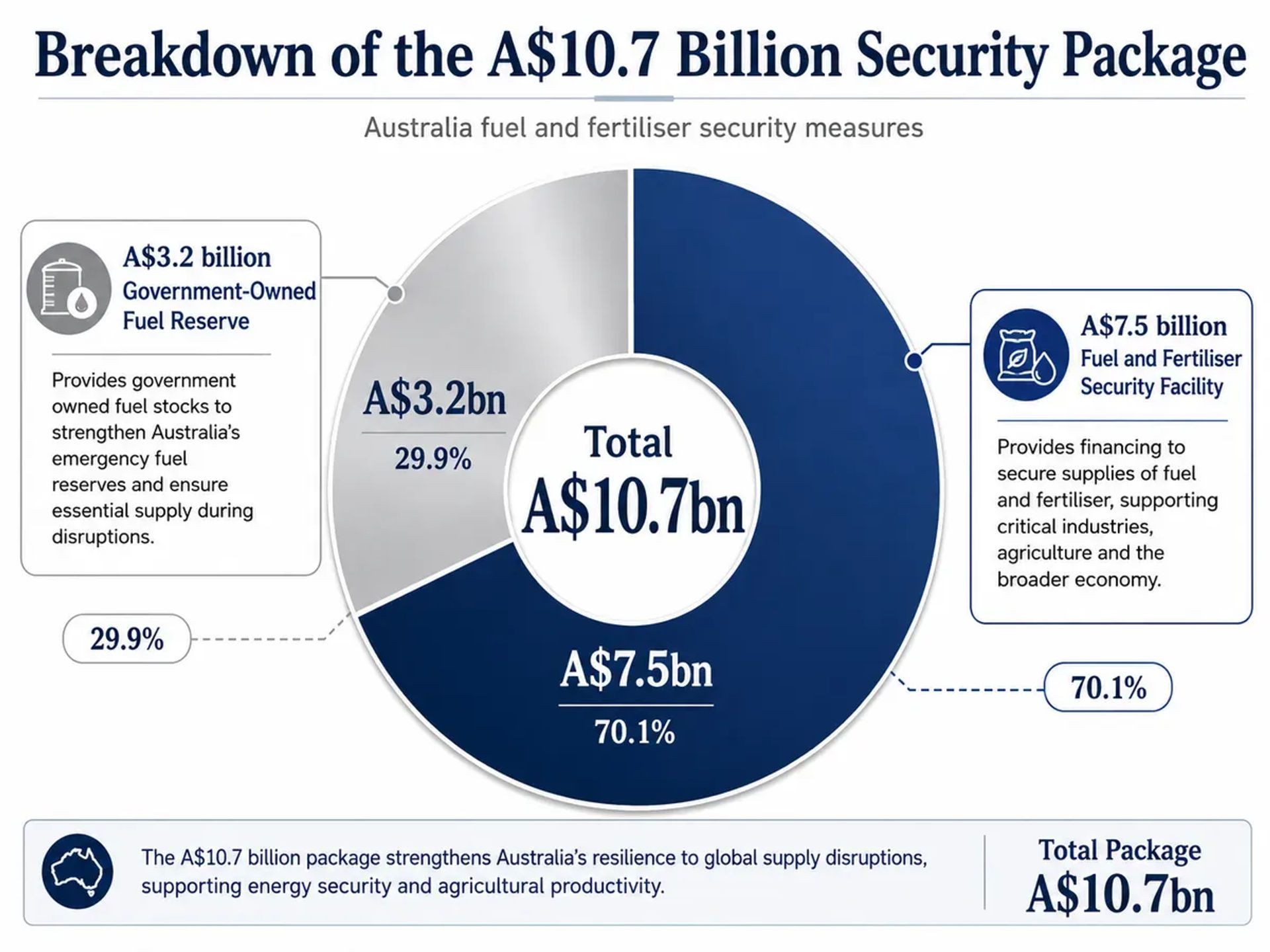
In addition to the government-owned reserve, the Australian Labor Party leadership will implement stricter requirements for the private sector. The Minimum Stockholding Obligation (MSO) for private fuel companies will be increased by approximately 10 days for all fuel types. When combined with the new government reserve, these measures are intended to ensure that Australia maintains at least 50 days of supply for diesel and aviation fuel. This move marks a significant reversal of previous policy positions which had suggested that a government-owned reserve was not a feasible undertaking for the nation.

The broader A$10.7 billion package also includes A$7.5 billion for the establishment of a Fuel and Fertiliser Security Facility. This facility will be tasked with increasing domestic supply and storage capacity through various financial support mechanisms. The Australian Treasury and Export Finance Australia are expected to play roles in the administration and oversight of these funds, ensuring that the investment translates into tangible infrastructure and stock levels. The focus on fertiliser security is particularly relevant for the agricultural sector, which relies on consistent access to nutrients to maintain food production levels.
These policy changes come at a time when Australia’s energy independence has been under intense scrutiny. Historically, the nation has imported approximately 80% of its fuel needs, leaving the economy exposed to price volatility and physical shortages during international crises. In early 2026, geopolitical events, including conflict in the Middle East and the Iran war, disrupted international oil supplies, leading to immediate fuel shortages and price spikes across the country. These events served as a catalyst for the Albanese government to accelerate its plans for national resilience.
Beyond energy security, the May 12 budget is expected to introduce a 'Covid-era-style' tax lifeline for businesses. The Australian Treasury has developed a two-year loss carry-back mechanism, a scheme similar to the one utilised during the COVID-19 pandemic. This mechanism allows companies to apply current financial losses against previously taxed profits from earlier years, resulting in a cash refund from the Australian Taxation Office. During its previous implementation, this scheme provided approximately A$5 billion in refunds to businesses, providing essential liquidity during periods of economic downturn.

Related Articles


Comments
0Loading...
No comments yet. Be the first to share your thoughts.
