
Australian GDP growth slows to 0.3% as high rates and weather disrupt activity
Australia's economic growth slowed sharply in the first quarter of 2026, with Gross Domestic Product expanding by just 0.3% quarter-on-quarter. The expansion fell short of the market expectation of a 0.5% increase and represented the weakest quarterly performance in a year. The slowdown has highlighted the compounding pressures of elevated interest rates and living costs on households, combined with severe weather disruptions that hit key export sectors.
Annual GDP growth for the year to March 2026 stood at 2.5%, down from 2.6% in the previous quarter and below the forecast of 2.7%. The Australian Bureau of Statistics released the National Accounts for the period ending March 31, 2026, on June 3, 2026, revealing a stark deceleration compared to the final quarter of 2025, when the economy grew by a stronger 0.9% quarter-on-quarter and 2.6% year-on-year. The local currency reacted to the economic slowdown, with the AUD/USD trading around 0.7175 - 0.7178 following the release of the data.
External Trade and Weather Disruptions
A primary driver of the weak first-quarter growth was a 0.8 percentage points subtraction from GDP growth due to net trade. Total exports declined by 1.1% over the quarter, while imports rose by 2.1%.
The slump in exports was largely due to severe weather conditions in northern and western parts of the country. Cyclone Narelle and Cyclone Koji struck in March 2026, disrupting vital commodity shipping routes and mining operations. Consequently, mining production registered a decline of 1.5% over the quarter. This disruption heavily curtailed shipments of iron ore and coal, cutting into the nation's primary export earnings.
Domestic Consumption and Government Spending
Domestic consumption offered little support to offset the drag from trade. Household consumption increased by a modest 0.5% during the quarter. While spending on essential items such as utilities rose sharply following the conclusion of various government energy rebates, discretionary spending experienced minimal growth.

The household saving to income ratio fell to 6.2% in the first quarter of 2026, down from 7.0% in the final quarter of 2025, indicating that households are increasingly drawing down on their savings to meet basic living costs. Reflecting these mounting pressures, real GDP per capita declined by -0.1%, pointing to a contraction in individual living standards despite the positive overall growth rate of the broader economy.
Public sector spending also contracted, further slowing economic momentum. Government final consumption expenditure declined by 0.2% in the March quarter. This marked the weakest quarterly result for public consumption since September 2022. The drop was driven by the expiry of major energy bill relief measures and a reduction in defence spending.
Data Centre Investment Surges
In contrast to the weak consumption and trade figures, private business investment emerged as a key source of resilience, surging by 6.0%. This strong performance was heavily supported by a 16.3% increase in machinery and equipment investment, marking its largest quarterly rise in 30 years.

Related Articles
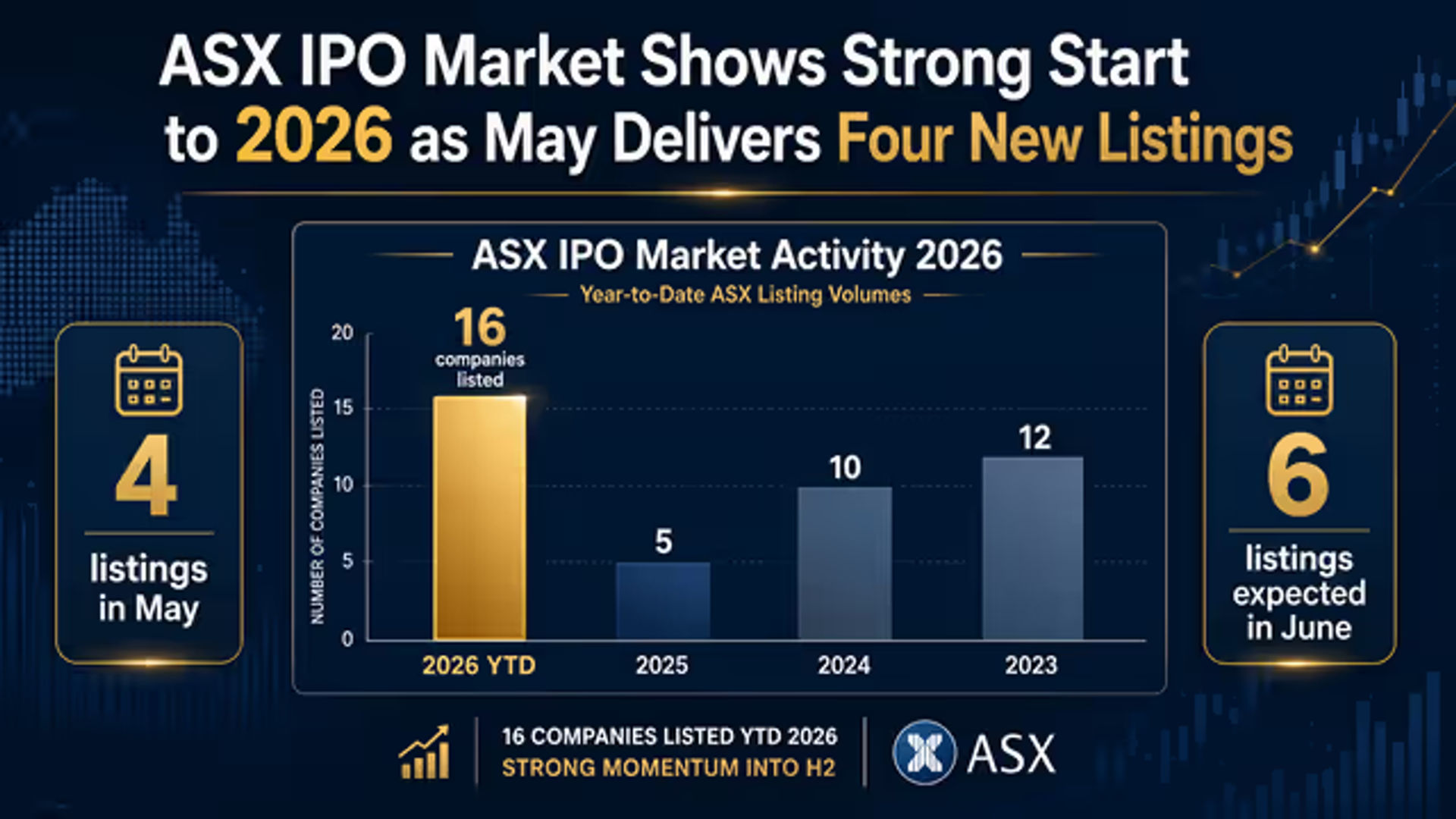
ASX IPO Market Shows Strong Start to 2026 as May Delivers Four New Listings
The Australian IPO market has experienced a significant resurgence in 2026, with 16 listings completed by early June. Despite initial debut-day gains averaging 34.5%, retaining positive momentum post-listing remains a challenge for many new market entrants.
Comments
0Loading...
No comments yet. Be the first to share your thoughts.

