
Gen Z Leads New Zealand’s Retail Investment Surge Amid Economic Uncertainty
New Zealand’s financial landscape is undergoing a generational shift as Gen Z enters the retail investment market at rates significantly higher than their predecessors. According to a May 2026 report from the World Economic Forum (WEF), 30% of New Zealand’s Gen Z population began investing in early adulthood. This figure stands in stark contrast to the 9% of Generation X and 6% of Baby Boomers who engaged with financial markets at the same life stage.

This surge in participation is occurring despite—and in some cases because of—significant economic headwinds. While traditional paths to wealth, such as home ownership, are perceived as increasingly unattainable, younger Kiwis are turning to digital platforms to secure their financial futures. Data from the Financial Services Council’s (FSC) 'Money & You' report indicates that 93% of Gen Z in New Zealand are concerned about the cost of living, while 64% report living paycheck to paycheck, a figure notably higher than the 52% global average.
The Fintech Catalyst
The democratisation of the New Zealand share market has been largely facilitated by the rapid growth of the domestic fintech sector. Sharesies, a prominent digital investment platform, now serves over 870,000 users across New Zealand and Australia, managing more than $9 billion in assets. The platform reported record trading volumes of $3.35 billion in the September quarter of 2025, highlighting the scale of retail activity.
New Zealand’s fintech revenue is currently expanding at an annual rate of 32%, more than triple the growth rate of the broader technology sector. This growth is supported by a robust investment environment; in the second half of 2025, fintech investment in New Zealand increased by 133% year-on-year, bolstered by five multi-million-dollar deals.
Regulatory frameworks have also paved the way for this digital transition. The Financial Markets Conduct Act (FMCA) 2013 laid the groundwork for innovation, while the more recent Customer and Product Data Act 2025—which began applying to the banking sector in December 2025—has enabled fintech companies to access customer bank data with explicit consent, further streamlining the user experience for apps like Sharesies and the digital wallet Dosh.
Economic Necessity and the Job Market
For many young New Zealanders, investing is viewed as a necessity rather than a hobby. The Auckland youth unemployment rate for those aged 15-24 reached 18% in March 2025, a doubling from the 9% recorded in March 2023. This tightening job market, combined with high inflation, has shifted the psychological approach to wealth.

An April 2026 report from Psychology Today NZ found that 70% of young New Zealand adults feel building wealth through traditional means is out of reach, and 65% express doubt regarding the efficacy of conventional retirement planning. Consequently, 86% of Gen Z reported learning about personal investing immediately upon entering the workforce, seeking proactive control over their capital.
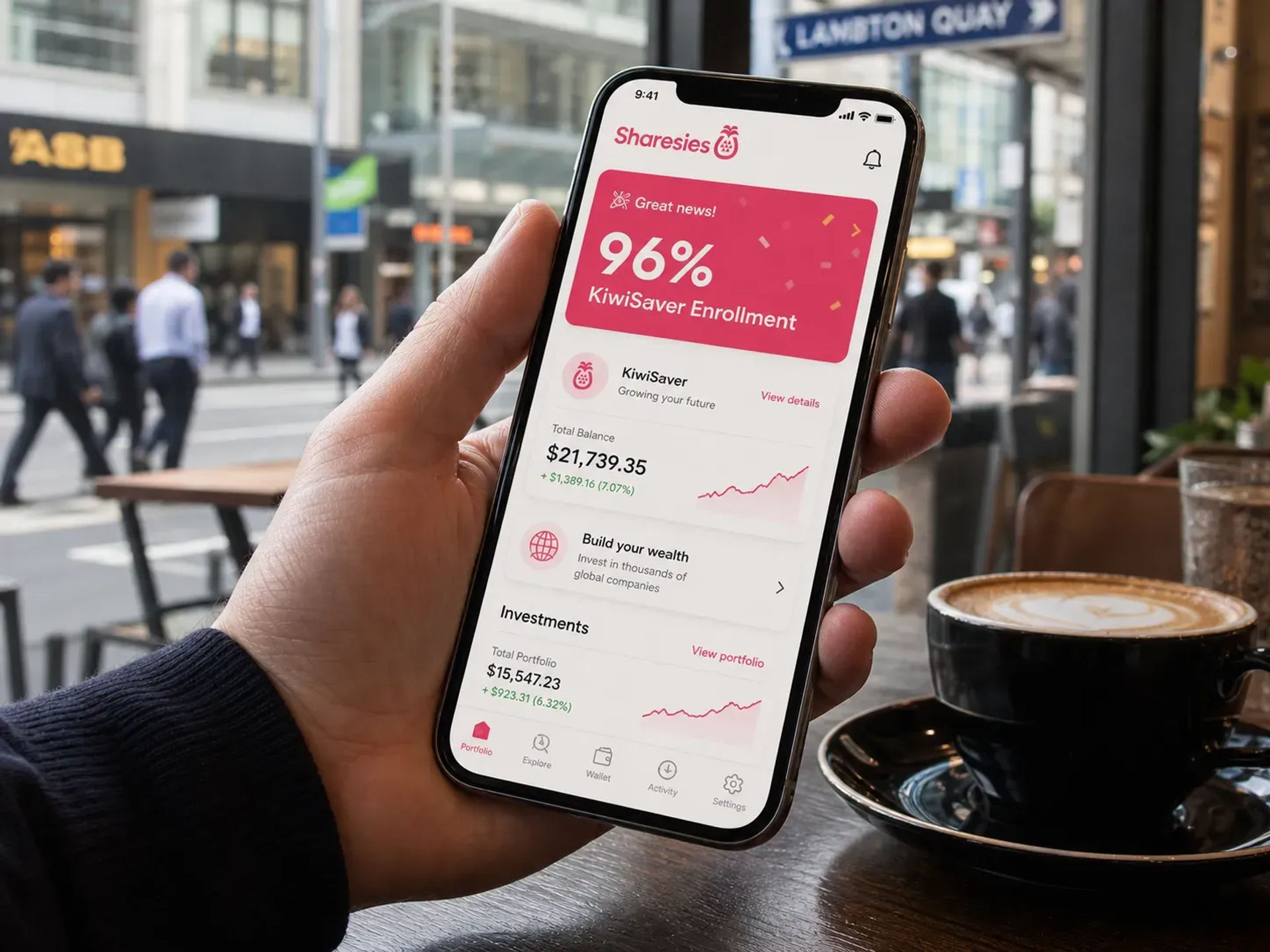
While 96% of Gen Z are enrolled in KiwiSaver—with 80% having checked their fund balance within the past year—there is a clear trend toward self-directed brokerage. Younger generations, including Gen Z, Gen Alpha, and Millennials, now constitute 71% of all customers trading crypto-related instruments on the Sharesies app, suggesting a higher tolerance for volatility or a search for higher returns in a stagnant economic environment.
Related Articles


Comments
0Loading...
No comments yet. Be the first to share your thoughts.
