New Zealand Inflation Remains Stubborn at 3.1%, Defying RBNZ Forecasts
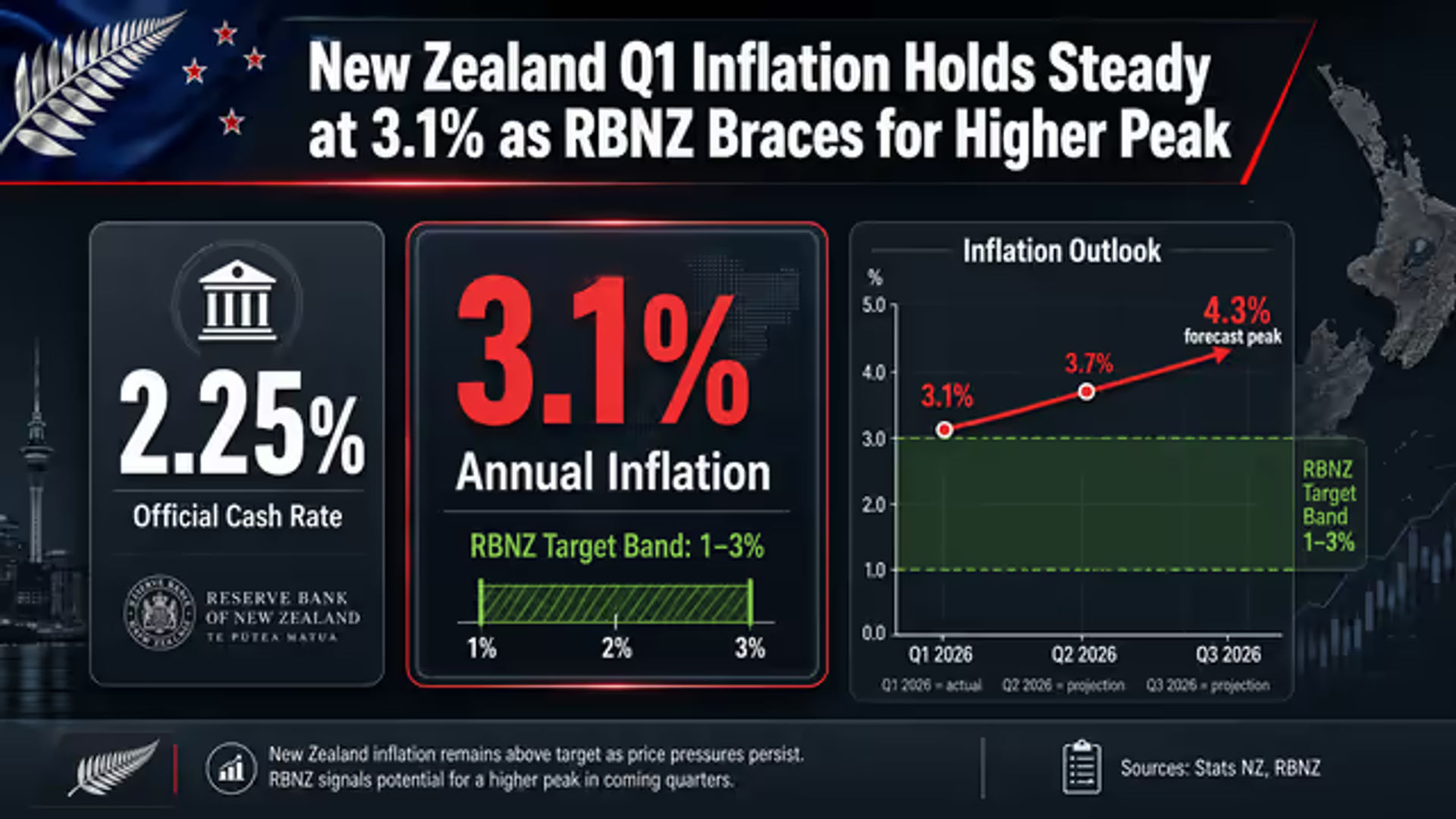
New Zealand’s annual inflation rate remained unchanged at 3.1% for the March 2026 quarter, according to the latest data from Statistics New Zealand. The result marks a persistent challenge for the Reserve Bank of New Zealand (RBNZ), as price growth continues to sit outside the bank’s mandated 1-3% target range.
The consumer price index (CPI) figures released for the first quarter of 2026 surprised financial markets, which had largely anticipated a cooling to 2.9%. Instead, the headline rate held steady from the December 2025 quarter, driven by significant increases in essential services and energy costs. The RBNZ had previously forecasted that inflation would return to within its target band by this quarter—a projection that has now been officially missed.
Domestic Drivers: Electricity and Local Rates
The primary contributors to the annual 3.1% figure were domestic in nature. Electricity prices saw a substantial 12.5% increase year-over-year, the largest single annual contributor to the CPI. This rise has placed significant pressure on both household budgets and small business operational costs across the country.
Simultaneously, local authority rates and payments rose by 8.8% annually. This reflects the ongoing infrastructure funding challenges faced by councils nationwide, which are being passed on to homeowners and renters alike. While the New Zealand government has proposed a cap on local council rates to address cost-of-living pressures, the transition period for such a measure is not scheduled to begin until 2027, offering little immediate relief for consumers.
On a quarterly basis, the CPI rose by 0.9% in the March 2026 period. This was influenced heavily by a 3.5% surge in petrol prices, largely attributed to escalating geopolitical tensions in the Middle East affecting global oil supplies. Furthermore, pharmaceutical costs jumped by 17.7% during the quarter, a spike driven primarily by changes to prescription charges.

The RBNZ’s Policy Dilemma
The persistence of inflation above 3% places the RBNZ’s Monetary Policy Committee in a difficult position. On April 8, 2026, the committee reached a consensus to hold the Official Cash Rate (OCR) at 2.25%, following a similar hold in February. At that time, the central bank expressed confidence that inflation was on a downward trajectory toward the 2% midpoint.
However, with the actual Q1 figure of 3.1% exceeding the RBNZ’s own forecast of 3.0%, the timeline for potential interest rate cuts appears to be shifting. Economists are now weighing the possibility that the RBNZ may need to maintain its restrictive monetary policy for longer than previously expected to ensure inflation does not become entrenched. There is even growing discussion regarding the necessity of further hikes if core inflation measures do not show more aggressive cooling in the coming months.
Transparency regarding these decisions is set to increase. On April 30, 2026, changes to the RBNZ’s Monetary Policy Committee Charter took effect. These changes introduce attributed voting records and encourage the public communication of individual members' views, which will provide markets with a clearer picture of the internal debate regarding the inflation outlook.
Trans-Tasman Comparison
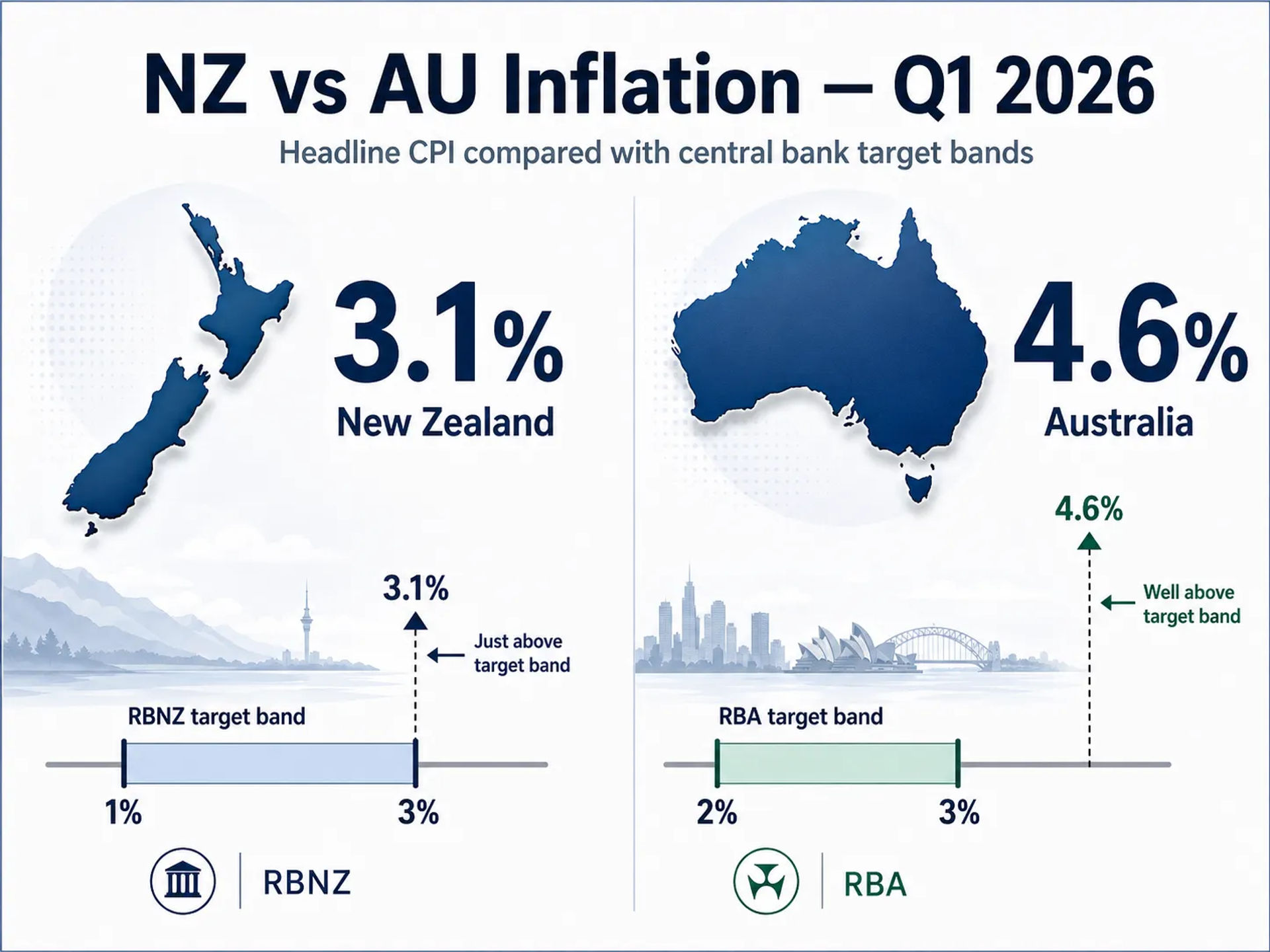
New Zealand’s inflationary environment, while stubborn, remains lower than that of its closest neighbour. Australia reported a headline inflation rate of 4.6% for the March 2026 quarter, a sharp increase from the 3.7% recorded in the previous quarter. Like New Zealand, the Reserve Bank of Australia (RBA) is grappling with prices that sit well above its 2-3% target range.
Related Articles
Comments
0Loading...
No comments yet. Be the first to share your thoughts.