
New Zealand Labour Market Data Awaited as RBNZ Policy Outlook Looms
New Zealand financial markets are focused on the upcoming release of the Household Labour Force Survey for the first quarter of 2026. Statistics New Zealand is scheduled to publish the data on May 6, 2026, providing a critical update on the nation's employment landscape and the trajectory of the broader economy. This data release is a primary indicator for the health of the labour market and serves as a fundamental component in determining the future path of national monetary policy.
Analysts are closely watching the unemployment rate, with a market consensus forecast of 5.4% for the March quarter. This would represent a steady state compared to the 5.4% recorded in the final quarter of 2025. However, there is a notable divergence in expectations among major financial institutions. ANZ and Westpac issued forecasts on April 28 and April 29, 2026, respectively, suggesting the unemployment rate will remain unchanged at 5.4%. In contrast, ASB and BNZ provided updated forecasts on May 2, 2026, projecting a slight increase in the unemployment rate to 5.5% for the first quarter of 2026.

These figures are particularly significant when compared to the Reserve Bank of New Zealand's earlier projections. In its February 2026 Monetary Policy Statement, the Reserve Bank of New Zealand anticipated an unemployment rate of 5.3% for the first quarter of 2026. Since that projection was made, various geopolitical developments have introduced new variables into the economic outlook, potentially clouding the pace of the recovery and contributing to a persistent upward trend in unemployment figures.
The previous quarter, ending December 2025, saw the unemployment rate sit at 5.4%. During that period, the labour market supported 2.299 million people in full-time employment. While the headline unemployment rate has shown signs of softening, more recent monthly indicators have provided a more nuanced view of the labour market's resilience. In March 2026, seasonally adjusted filled jobs across all industries increased by 0.3%, bringing the total number of filled jobs to 2.35 million. This figure represents a 14-month high, suggesting that while the unemployment rate may be under pressure, certain sectors of the economy continue to add positions at a steady pace.
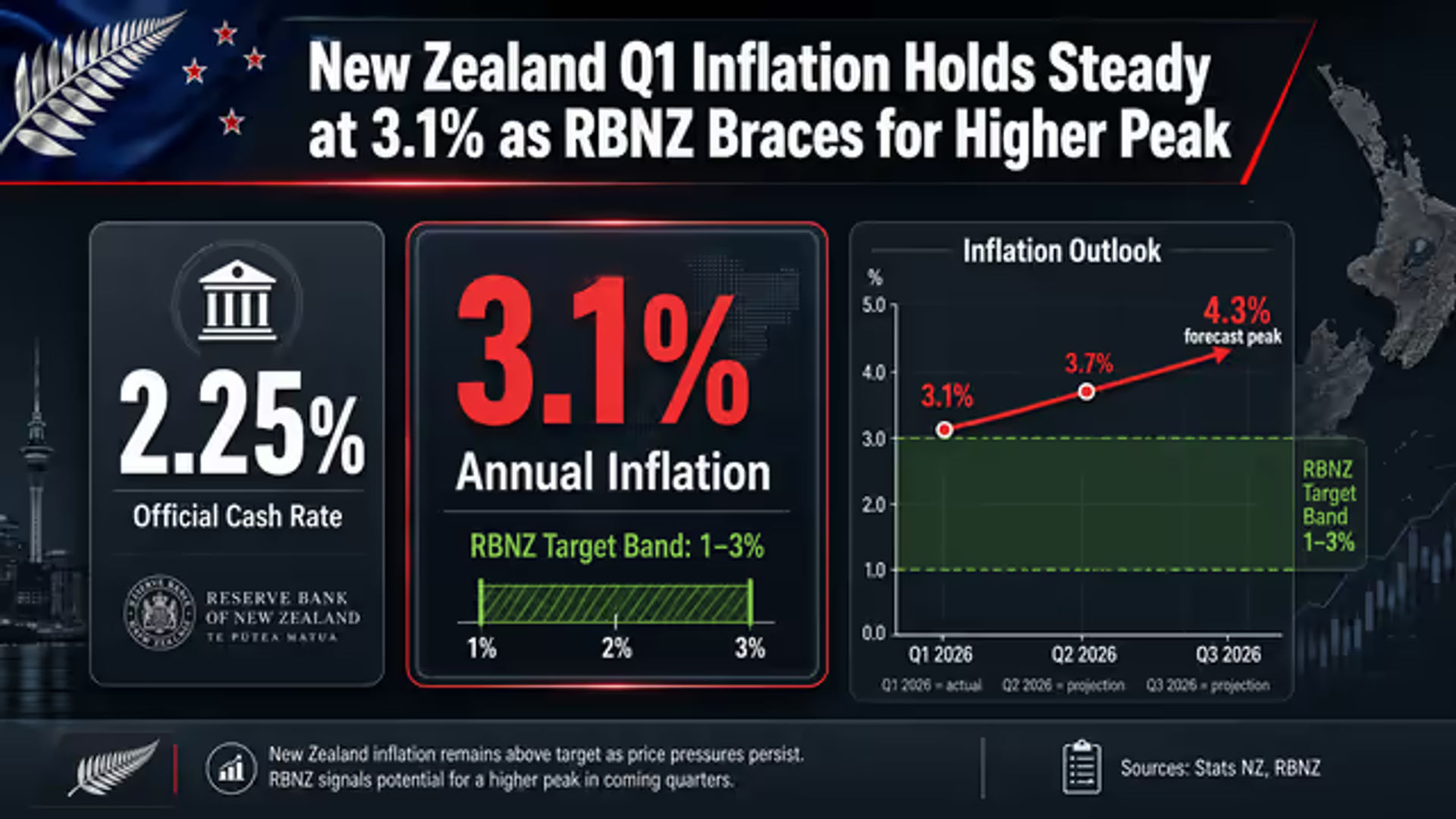
The Reserve Bank of New Zealand operates under a dual mandate, which requires the organisation to maintain price stability while simultaneously supporting maximum sustainable employment. Consequently, the Household Labour Force Survey data is a primary input for the central bank’s monetary policy decisions. The upcoming figures will be analysed to determine if the labour market is operating at a level consistent with the bank's inflation targets. A shift in the unemployment rate beyond the expected 5.4% or 5.5% could influence the central bank's stance on interest rates as it seeks to balance inflationary pressures with the overall health of the workforce.

The persistent upward trend in unemployment observed over recent quarters has raised questions regarding the strength of the economic recovery. While the 0.3% increase in filled jobs in March 2026 to 2.35 million offers some optimism, the broader Household Labour Force Survey data will provide a more comprehensive look at participation rates and full-time employment levels. The 2.299 million full-time employees recorded in the final quarter of 2025 will serve as the benchmark for assessing growth or contraction in the first quarter of 2026.

Related Articles
Comments
0Loading...
No comments yet. Be the first to share your thoughts.
