
New Zealand Population Growth Accelerates to 0.8% as Citizen Exodus Slows
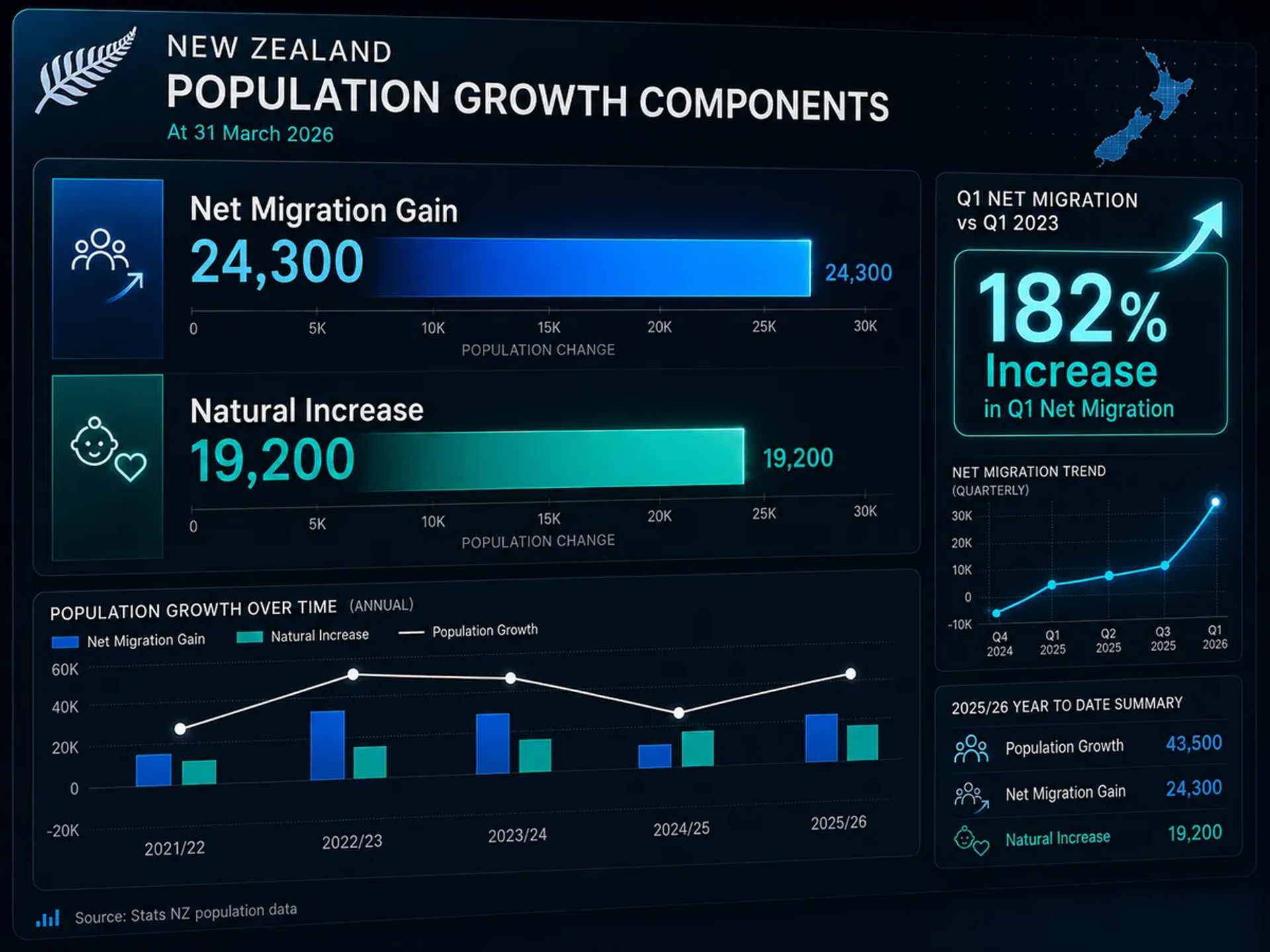
New Zealand's estimated resident population reached 5,361,300 as of March 31, 2026, following a year of renewed expansion. The population grew by 0.8% annually, adding 43,500 people in the 12 months to March 2026. This growth represents the strongest annual population expansion since the fourth quarter of 2024, signaling a rebound from the sluggish levels observed throughout much of the previous year. The increase was primarily driven by a combination of net international migration gains and a steady natural increase, alongside a notable slowdown in the number of New Zealand citizens departing for overseas opportunities.

Statistics New Zealand released these provisional figures on May 18, 2026, detailing a shift in the country's demographic trajectory. The 0.8% growth rate contrasts with the figures from mid-2025, when annual population growth dipped to 0.6%, the lowest level in 13 years when excluding periods of COVID-19 border closures. While the current growth marks an improvement, it remains below the 15-year average of 64,400 people added annually. The data suggests that while the population is expanding again, the pace of growth is still finding its footing in a post-pandemic economic environment.
Migration Trends and Citizen Departures
Net international migration was the primary engine of growth in the year to March 2026, contributing 24,300 people to the total population. This migration gain accounted for 56% of the overall increase. This is a significant rise compared to the year ending March 2025, which saw a net migration gain of 14,000. The momentum in migration was particularly evident in the first quarter of 2026, which recorded a net migration gain of 12,178 people. This figure represents a 182% increase from the net migration gain recorded in the first quarter of 2025.
A critical factor in this recovery is the slowing exodus of New Zealand citizens. In the year ending March 2026, New Zealand citizen departures totalled approximately 111,000. However, the net loss of New Zealand citizens in the first quarter of 2026 was 9,489, which is a 5% decrease from the same quarter in 2025 and a 21% decrease from the first quarter of 2024. Citizen departures have been on a steady decline since May 2025, suggesting that the peak of the recent outward migration wave may have passed.
Natural increase, defined as the number of births minus the number of deaths, accounted for the remaining 19,200 people added to the population, or 44% of the total growth. This balance between migration and natural growth highlights a diversifying source of population expansion as the country moves through 2026.
Economic and Monetary Policy Implications
The acceleration in population growth has immediate implications for the New Zealand economy, particularly regarding domestic demand and the labour market. Historically, New Zealand has relied on population growth to fuel demand and address skill shortages, as productivity per worker remains lower than in many comparable developed nations. The arrival of new residents typically boosts housing demand and consumer spending, though it also places additional pressure on infrastructure.

Related Articles
Comments
0Loading...
No comments yet. Be the first to share your thoughts.
