NZX 50 Ends Week Lower Amid Geopolitical Tensions
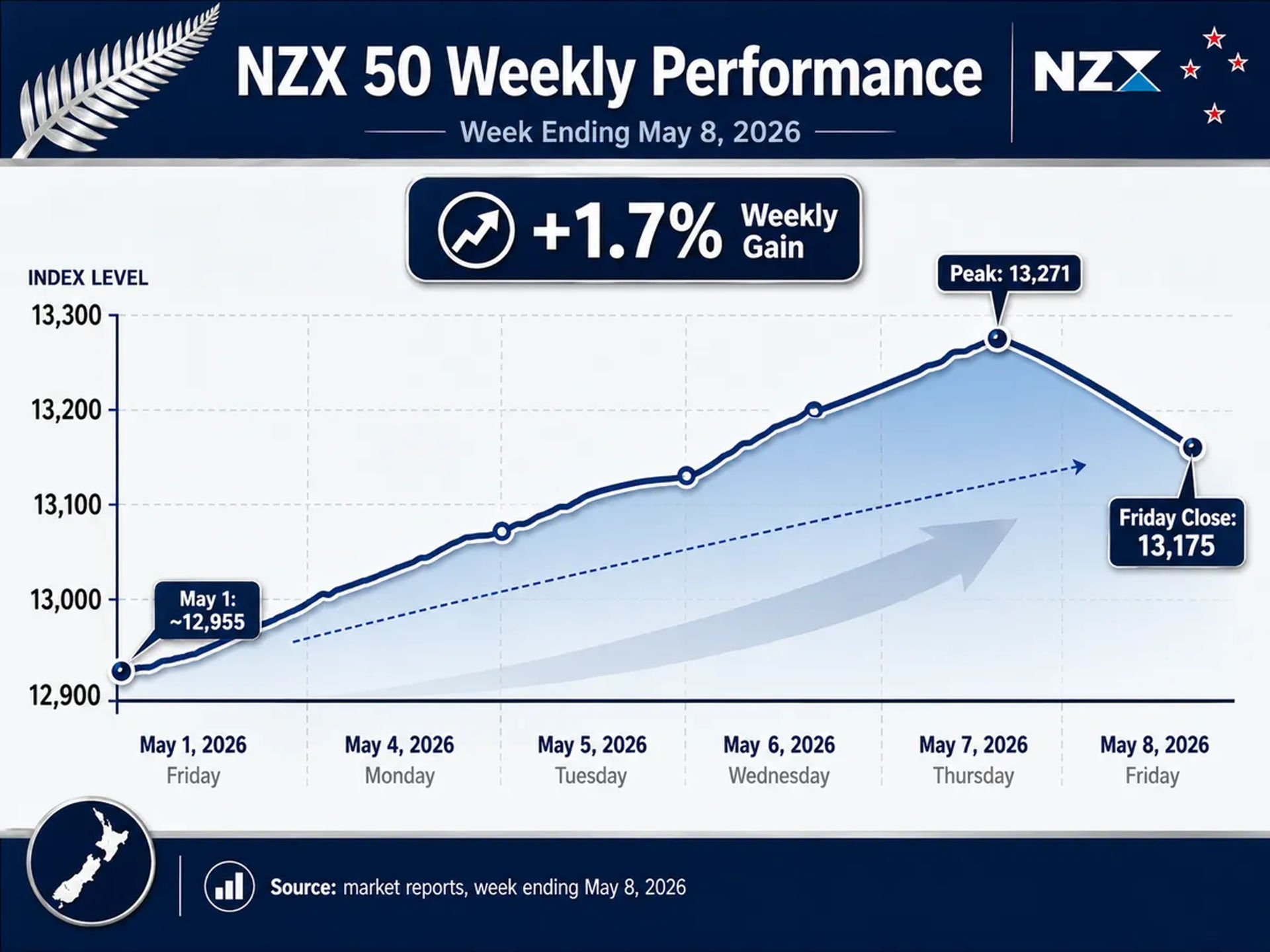
The New Zealand sharemarket concluded the trading week on a downward note, with the benchmark NZX 50 index closing at 13,175 points on Friday, May 8, 2026. This result marked a daily decline of -0.72% from the previous session, as international factors weighed heavily on local investor sentiment. The retreat followed a period of heightened global volatility, specifically concerning geopolitical relations between the United States and Iran, alongside a subdued performance on Wall Street that provided a negative lead-in for the New Zealand trading day.
Despite the Friday dip, the broader trajectory for the week remained positive. The NZX 50 recorded a weekly gain of 1.7% for the period ending May 8, 2026, which represents the second consecutive week of growth for the index. This weekly performance was bolstered by a strong start to the month, as seen on May 1, 2026, when the market began the period on a high. However, the monthly performance as of the Friday close shows a slight contraction of -0.74%, reflecting the volatility encountered during the first week of May.
International Influences and Geopolitical Factors
The primary catalysts for the Friday decline were external, as New Zealand's open economy remains sensitive to shifts in global trade and security. Market participants closely monitored developments in the Middle East, where wavering hopes for a peace deal between the US and Iran led to increased uncertainty. This geopolitical tension contributed to rising oil prices, which often creates inflationary pressure and impacts corporate operating costs across the Tasman.
Furthermore, the local market followed the lead of United States equities. A downbeat session on Wall Street overnight provided a negative lead-in for the New Zealand trading day. As global capital flows respond to changes in the world's largest economy, the NZX frequently mirrors the movements of major US indices, particularly when broader macroeconomic concerns such as trade stability and energy costs are at the forefront of the global financial discourse.
Corporate Performance and Sector Movements
The daily downturn was felt across several major sectors, with the banking and transport industries seeing notable losses. Westpac Banking Corp. led the decline among large-cap stocks, with its share price falling -4.3% during the Friday session. Other financial institutions also faced selling pressure, with ANZ Group recording a decrease as part of the broader market retreat. The banking sector often serves as a proxy for general economic sentiment, and the decline in these major Australian-owned banks reflected the cautious mood of the day.

The aviation and construction sectors were not immune to the broader market sentiment. Air New Zealand shares dropped by -3.4%, while Fletcher Building saw a decline of -3.1%. These movements reflect the sensitivity of transport and infrastructure stocks to rising energy costs and shifting economic expectations. Other significant decliners on May 8, 2026, included Ventia Services Group, A2 Milk, and Port of Tauranga, all of which contributed to the index's downward movement.
Conversely, a selection of stocks managed to decouple from the wider market trend to post gains. Gentrack was the standout performer of the day, with its shares rising . This was followed by and , which both saw their share prices increase despite the general market decline. These gains highlight the mixed nature of the session, where specific corporate developments or sector-specific demand provided a buffer against the external headwinds.
Related Articles


Comments
0Loading...
No comments yet. Be the first to share your thoughts.