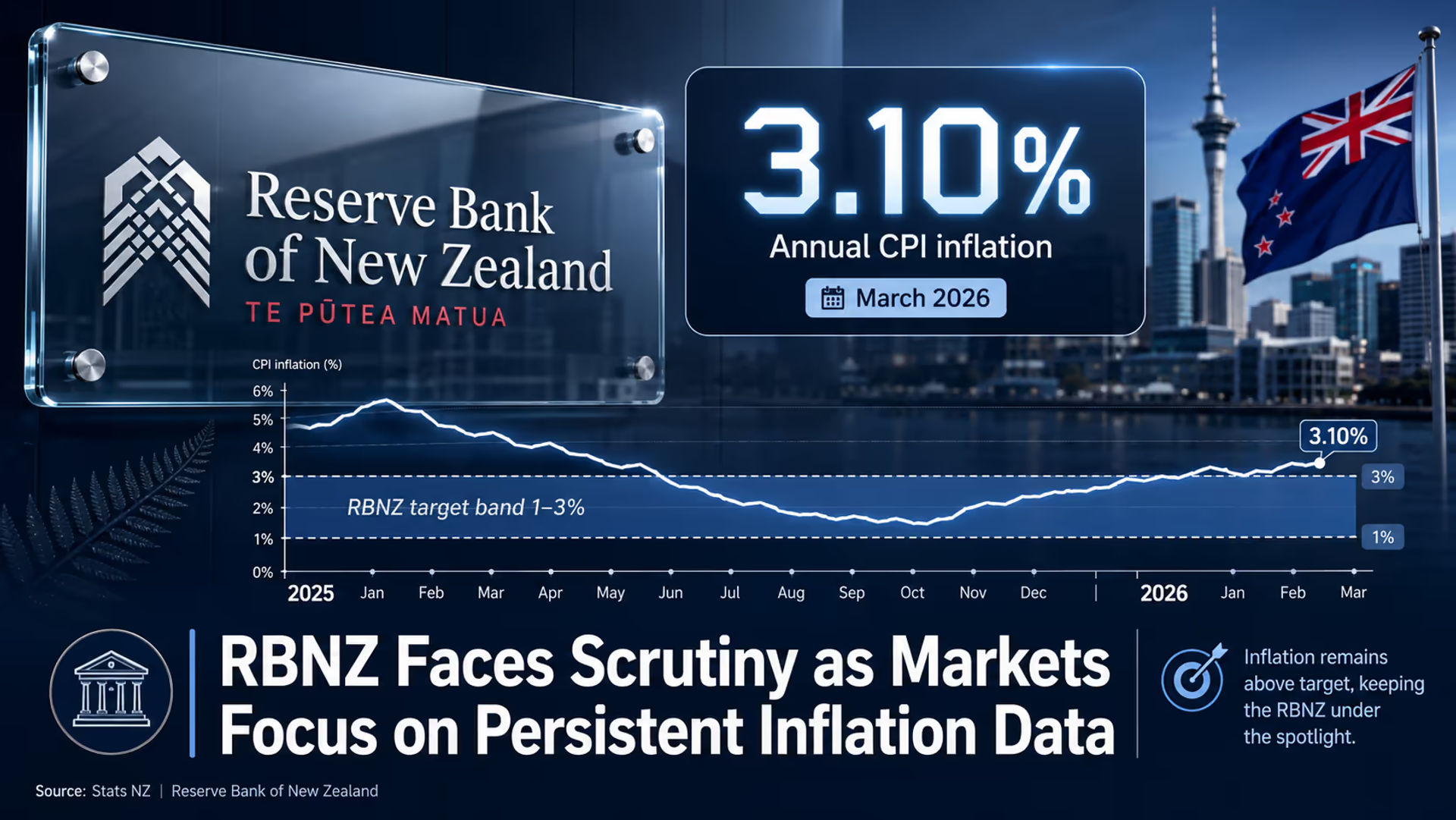
RBNZ Faces Scrutiny as Markets Focus on Persistent Inflation Data
The Reserve Bank of New Zealand faces heightened scrutiny as market participants prepare for a scheduled focus on inflation data on May 20, 2026. While official figures for the March 2026 quarter were published by Statistics New Zealand on April 21, 2026, tomorrow's anticipated re-evaluation by several financial platforms is drawing fresh attention to the persistent price pressures that continue to challenge the central bank's price stability mandate.
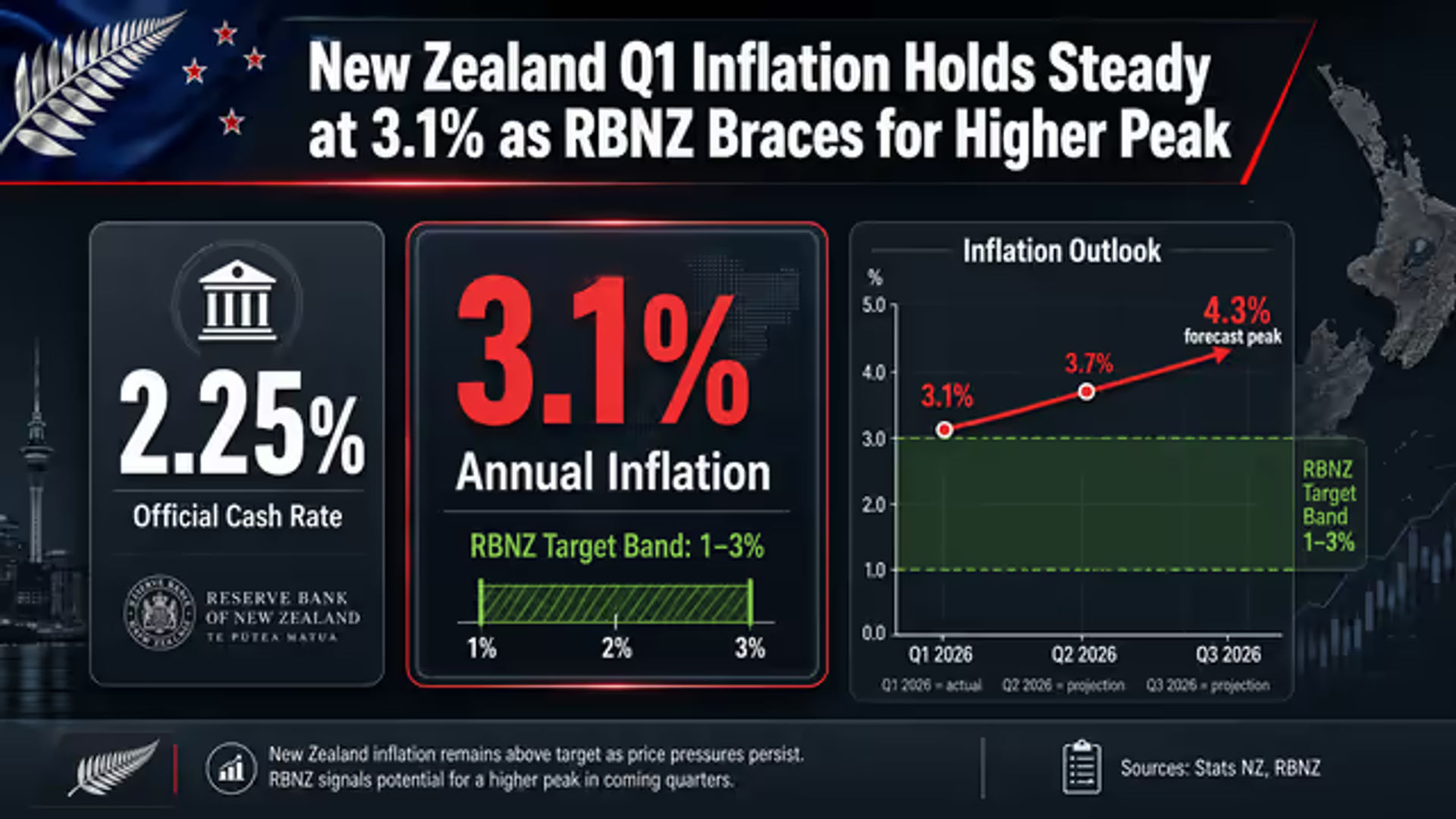
Annual Consumer Price Index (CPI) inflation for the first quarter of 2026 stood at 3.10%, a figure that remained unchanged from the December 2025 quarter. This result has placed significant pressure on the Reserve Bank of New Zealand, as the 3.10% rate sits above the bank's established 1-3% target band. The persistence of inflation at this level has surpassed both market expectations, which sat at 2.90%, and the central bank's own February forecast of 2.80%.
Internal Price Pressures and Quarterly Gains
The quarterly data provided by Statistics New Zealand revealed a notable acceleration in price growth during the first three months of the year. The quarterly CPI increased by 0.90% in the March 2026 quarter, an increase from the 0.60% rise recorded in the previous period. This figure also exceeded the consensus forecast among economists, which had predicted a 0.80% rise for the quarter.

Specific sectors have been identified as primary drivers of these inflationary pressures. Annual figures for the first quarter showed a 12.50% rise in electricity prices, while local authority rates and payments increased by 8.80%. Furthermore, petrol prices surged by 3.50% during the March 2026 quarter. These increases, particularly the rise in fuel costs, were attributed in part to global supply disruptions occurring throughout March.

Following the release of the official Q1 data on April 21, financial markets responded immediately. The New Zealand Dollar (NZD) rose 0.44% against the US dollar to reach 0.5908. Simultaneously, two-year swap rates jumped 5 basis points to reach 3.3951%, reflecting the market's adjustment to the higher-than-expected inflation reading.
Shifts in Inflation Expectations
The challenge for the Reserve Bank of New Zealand is compounded by a recent upward trend in inflation expectations. On May 13, 2026, the central bank released its Q2 2026 Survey of Expectations, which indicated that forward-looking sentiment is shifting away from the target midpoint. One-year-ahead inflation expectations have risen to , while two-year-ahead expectations moved up to .
Related Articles
Comments
0Loading...
No comments yet. Be the first to share your thoughts.

